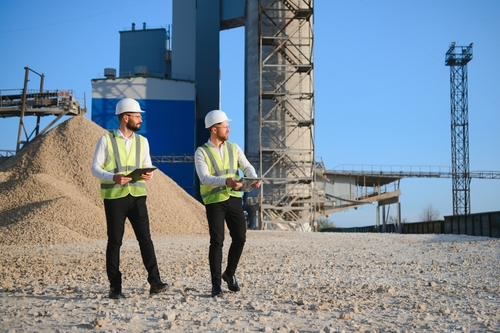


What is Low Carbon Concrete? Explained for Sustainable Construction.

If you work in concrete today, you’ve probably heard the term “low-carbon concrete” more times than you can count.
In online forums, Reddit threads, and industry discussions, the same questions keep coming up:
- “How is ‘low-carbon concrete’ being defined on this project?”
- “How well are the practical trade-offs associated with low-carbon requirements understood when they are written into specs?”
- “How am I supposed to hit carbon targets without hurting performance or blowing up costs?”
These are fair questions. Low-carbon requirements are increasingly appearing in projects before there is consistent alignment on definitions, assumptions, and operational implications.
Let’s break it down in plain terms. Because how low-carbon concrete is defined — or not defined — directly affects risk, cost, and performance on real projects.
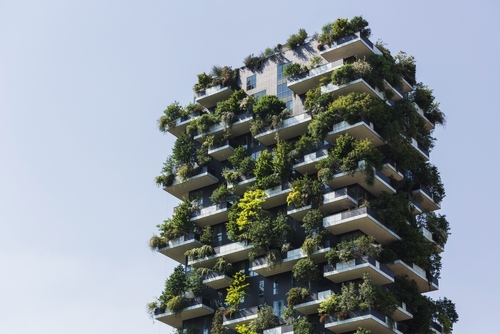
First: What People Usually Mean by “Low-Carbon Concrete”
In most cases, when someone asks for low-carbon concrete, they are referring to concrete with lower embodied carbon. The greenhouse gas (GHG) emissions associated with producing the concrete, often evaluated relative to a project- or market-specific baseline.
In some programs or projects, this relative reduction is expressed as a percentage target. Those targets are not universal definitions — they are project- or policy-specific ways of operationalizing a broader concept.
In commonly used carbon accounting frameworks, these emissions are primarily attributed to upstream activities such as cement production and raw material sourcing and transport.
Other sources of GHG emissions, including those associated with concrete placement, construction activities, and end-of-life demolition may also be considered, but whether they are included depends entirely on the system boundary being applied.
For example, in North America, concrete emissions are most often reported on a cradle-to-gate basis, ending when the concrete leaves the manufacturing plant. In many European frameworks, broader life-cycle boundaries that extend through use and end-of-life are more commonly applied.
That distinction matters, because it directly influences how producers evaluate options and prioritize carbon-reduction strategies.
What Low-Carbon Concrete Is Not (Common Sources of Confusion)
In practice, confusion around low-carbon concrete often comes from oversimplifying how carbon, performance, and constructability interact:
- There is no single “low-carbon mix” that works in all cases. Mix designs that reduce embodied carbon in one region or application may not be feasible in another due to differences in materials, codes, exposure conditions, and performance requirements.
- Lower embodied carbon does not inherently mean lower performance — but it requires intentional design. Many producers meet strength, durability, and schedule requirements while reducing carbon, though outcomes depend on factors such as curing time, exposure class, and early-age strength needs.
- Reducing cement content is important, but rarely sufficient on its own. Cement is typically the largest contributor to embodied carbon, but meaningful reductions often involve a combination of cement type, SCM selection, mix optimization, and project-specific constraints.
These nuances are often what create tension between producers, owners, and specifiers, especially when requirements are written without acknowledging local conditions or practical constraints.
Why Owners Are Asking for It (Even When the Ask Feels Vague)
Another common theme in industry discussions is frustration with unclear requirements:
“They’re asking for low carbon, but they can’t explain what they want.”
In most cases, owners are responding to external drivers rather than project-specific concrete considerations, including:
- Corporate sustainability commitments
- Public-sector carbon reduction goals
- Reporting obligations tied to ESG or disclosure frameworks
Because these requirements often originate outside of concrete-specific decision-making, the practical trade-offs they introduce — around mix design, performance, schedule, or risk — are not always explicitly addressed at the time specifications are written.
The requirement nonetheless flows downstream to producers, who are left to interpret and manage those trade-offs in practice.
In order to translate high-level carbon goals into something measurable, low-carbon requirements most often take the form of:
- Embodied carbon limits in specs
- Requests for **Environmental Product Declarations (EPDs)**
- Comparative carbon reporting during bidding
How Low-Carbon Requirements Show Up in Day-to-Day Work
Low-carbon concrete isn’t an abstract or theoretical issue for producers. It shows up in everyday workflows, often in ways teams weren’t originally set up to handle:
- Technical services teams fielding last-minute questions about carbon limits or documentation
- Sales teams trying to explain EPDs and carbon data to customers
- Producers managing added risk when requirements are unclear or inconsistently applied
In practice, Environmental Product Declarations (EPDs) and carbon reporting are the tools most teams encounter first. While EPDs are intended to provide transparency, they frequently raise practical questions:
- How can producers ensure EPDs align with the actual mixes placed on a project, given real-world changes in materials and conditions?
- How will carbon data be reviewed and compared across bids or submittals?
- How are unavoidable changes in materials or mix design expected to be handled?
As carbon reporting becomes a more common part of commercial and public project workflows, these questions move quickly from sustainability teams to estimating, sales, and operations. Without clear guidance on how carbon data is generated, interpreted, and applied, teams are often forced to react in real time — and reactive decision-making usually increases risk.
Continuing the Discussion Outside This Article
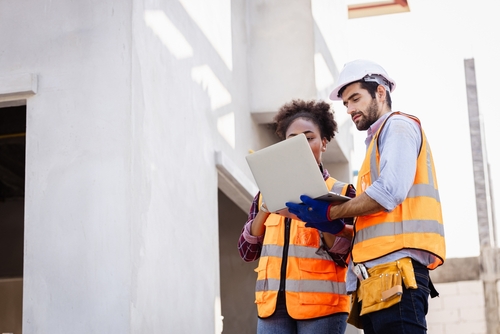
Why Practical Guidance Matters Right Now
The concrete industry isn’t being asked to abandon performance, reliability, or efficiency. It’s being asked to add carbon awareness to decisions that already matter.
Producers who understand low-carbon concrete in practical terms are better positioned to reduce bid risk, respond confidently to customer requests, protect margins, and make informed decisions about mix design and materials.
That’s why clear, practical discussions — grounded in real-world constraints and experience — matter more than ever.
Moving Forward Together
The concrete industry is navigating real change, and no one should have to figure it out alone.
That’s why Climate Earth has created The Future of Concrete, a monthly webinar series focused on the practical realities producers are facing as low-carbon concrete, sustainability requirements, EPDs, and carbon reporting become part of everyday work.
Each session is designed to help concrete professionals:
- Understand what’s changing and why
- Hear clear explanations without hype
- Learn how other producers are approaching similar challenges
- Stay ahead of market and regulatory shifts heading into 2026
If these topics are showing up in your bids, specs, or customer conversations, we invite you to join the conversation.
👉 Sign up for the Future of Concrete webinar series
📩 Subscribe to our newsletter for practical insights and upcoming sessions
🔗 Follow us on LinkedIn where we share industry updates, concrete sustainability discussions, and real-world examples from across the market
The future of concrete is being shaped right now. Staying informed is one of the simplest ways to stay competitive.

Découvrez comment Climate Earth peut vous aider à gagner plus de gros contrats.
Parcourez tous les blogs

How PCRs Govern Concrete Carbon Calculations

Why the Concrete Industry Is Being Pulled Into Carbon Rules