


What Is Global Warming Potential (GWP)?

Global warming potential (GWP) has become one of the most important metrics in construction, but it is often misunderstood. It shows up in Environmental Product Declarations, appears in specifications, and increasingly influences material selection, yet many people treat it as just a number rather than a system of measurement.
At its core, GWP is a way to express climate impact in a consistent unit. It converts different greenhouse gas emissions into a single value—carbon dioxide equivalent (CO₂e)—so that materials and processes can be compared directly. That simplicity is what makes it powerful. Once emissions are translated into CO₂e, they can be measured, specified, and optimized in a way that fits directly into engineering and procurement workflows.

What GWP Actually Measures
GWP measures how much heat a greenhouse gas traps in the atmosphere over a defined time period relative to carbon dioxide. Carbon dioxide is assigned a value of 1, and other gases are scaled based on how strongly they contribute to warming and how long they remain in the atmosphere.
In construction, this scientific concept is simplified into a product-level metric. Instead of tracking individual gases, GWP is reported as a single number that represents total greenhouse gas emissions associated with a material. The result is a practical unit: kilograms of CO₂e per unit of product.
How GWP Is Measured in the Built Environment
GWP in construction is calculated through life cycle assessment (LCA), which is the method used to quantify environmental impacts. LCA does not always include every possible stage of a product’s life, it follows a defined scope based on standards and rules for that product category.
Those boundaries matter. For concrete, many EPDs focus on “cradle-to-gate” impacts, which typically include raw material extraction, transport, and production at the plant, rather than the full life cycle. Because of this, GWP is only as consistent as the scope behind it. Two values can only be compared if they are calculated using the same boundaries, rules, and assumptions.
How GWP Connects to EPDs
Environmental Product Declarations (EPDs) are how GWP is communicated and standardized. An EPD is a document based on a Life Cycle Assessment (LC A) that reports environmental impacts for a product in a consistent format. Within an EPD, GWP is one of the primary reported indicators. It is presented as CO₂e per declared unit, such as one cubic meter of concrete, making it directly usable in design and procurement decisions.
EPDs follow strict rules defined by standards and product category rules (PCRs). These rules determine what data is included, how it is calculated, and how it is reported, ensuring that different products can be compared fairly.
Why EPDs Matter More Than the Number Alone
GWP without an EPD is just an estimate. What makes GWP usable is that EPDs provide a verified, standardized framework for calculating and reporting it. This changes how decisions are made. Instead of relying on assumptions or generic data, project teams can compare specific products using consistent, third-party verified information.
It also changes how producers operate. Because EPDs are based on actual mix designs and production data, they expose where emissions are coming from and where reductions are possible.
How GWP Is Used in Concrete
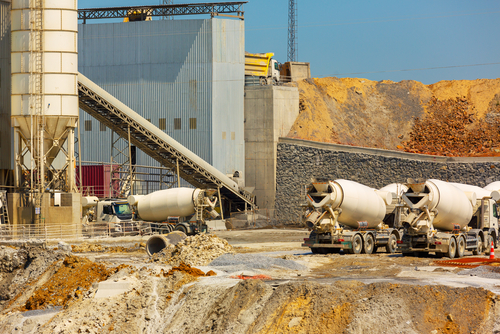
Concrete is one of the most significant sources of embodied carbon in construction, largely due to cement. Because of this, GWP is now commonly used to evaluate concrete mixes alongside traditional performance metrics. In practice, GWP is expressed per unit of concrete, typically per cubic meter. This allows mixes with different compositions to be compared directly while still meeting the same structural requirements.
This creates a new layer of decision-making. Two mixes that achieve the same strength may have very different GWP values, depending on cement content, material sourcing, and production methods.
Why GWP Is Becoming a Requirement, Not a Differentiator
As GWP becomes embedded in specifications and procurement processes, it is shifting from a “nice to have” to a baseline requirement. Materials are increasingly expected to meet both performance and carbon criteria. This changes how compliance is defined. A concrete mix is no longer evaluated only on strength and durability, but also on whether its GWP falls within acceptable limits.
At the same time, it creates opportunity. Producers who can deliver lower GWP mixes with verified data can differentiate themselves in a way that is measurable and comparable.
The Bigger Shift: Making Carbon Visible
The real impact of GWP is not just technical, it is structural. It makes emissions visible in a way they were not before, turning carbon into something that can be tracked and managed. This visibility creates feedback loops. Data from EPDs informs mix design, which improves performance, which feeds back into future EPDs.
Over time, this leads to continuous improvement. Small reductions at the mix level scale across projects, creating meaningful changes in overall emissions.
Have questions? Want to learn more? Contact Climate Earth.

Find out how Climate Earth can help you win more big business.
Browse all blogs
What Is Global Warming Potential (GWP)?

The Playbook to Low Carbon Concrete for Ready Mix Producers